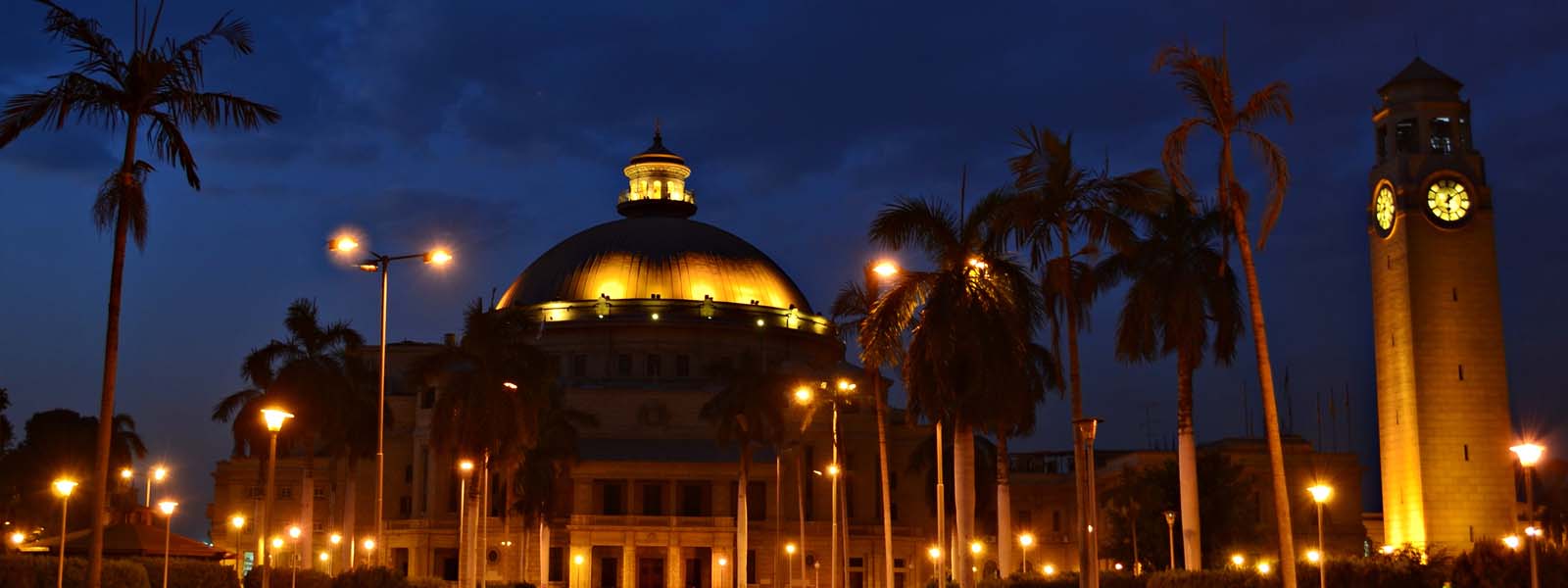
Cairo University (Arabic: جامعة القاهرة) is one of the oldest and most prestigious public universities in Egypt and Africa, officially founded on 21 December 1908. It is a major centre for higher education, research, and cultural development in the Arab world. Located in Giza on the west bank of the Nile, just outside central Cairo, its iconic dome building is one of the most recognized landmarks in Egypt.
Cairo University was established as an initiative to provide a modern higher education institution in Egypt instead of sending students abroad. It began as the Egyptian University (الجامعة المصرية), later renamed King Fuad I University (جامعة فؤاد الأول) in 1940, and finally Cairo University after the 1952 revolution. Over more than a century, it has played a central role in educational, intellectual, and cultural life in Egypt and the region.
Today, Cairo University comprises numerous faculties and institutes covering a wide range of fields including: Faculty of Engineering, Faculty of Medicine (Kasr Al-Ainy), Faculty of Computers and Artificial Intelligence, Faculty of Pharmacy, Faculty of Science, Faculty of Economics and Political Science, Faculty of Law, Faculty of Arts, Faculty of Agriculture, Faculty of Mass Communication, Faculty of Dentistry, Faculty of Veterinary Medicine, and many more academic units and specialised institutes.
The Kasr Al-Ainy Faculty of Medicine, part of Cairo University since 1925, is among the oldest medical schools in the Middle East. The associated Kasr Al-Ainy Hospital is the country's oldest and largest medical complex, serving millions of patients from across the country.
The university enrolls over 200,000 students — including international students — making it one of the largest student bodies of any university in the Middle East. It employs over 12,000 academic staff members across all faculties. Cairo University is widely considered a leader in higher education in Egypt, serving as a model for many subsequent Egyptian and Arab universities.
Cairo University is internationally recognized and ranked among the top universities globally in various university ranking systems. It is often listed as one of the best universities in Egypt and North Africa. The university has produced Nobel Prize laureates and nominees, including Naguib Mahfouz (Nobel Prize in Literature, 1988) and Ahmed Zewail (Nobel Prize in Chemistry, 1999), as well as numerous heads of state, prime ministers, diplomats, and leading intellectuals.
Cairo University is a founding member of the Association of Arab Universities and maintains partnerships with over 100 universities worldwide, including Oxford, Cambridge, MIT, the Sorbonne, and the University of Tokyo. Its research output — spanning thousands of peer-reviewed publications annually — places it among the most productive research institutions on the African continent. The university's libraries collectively hold over 3 million volumes.
The campus includes extensive facilities: academic buildings, student services, libraries, research centres, and cultural sites. It serves a diverse student population and provides services for both local and international students.
The Cairo University campus features academic buildings, libraries, research centres, and cultural sites in its iconic Giza location
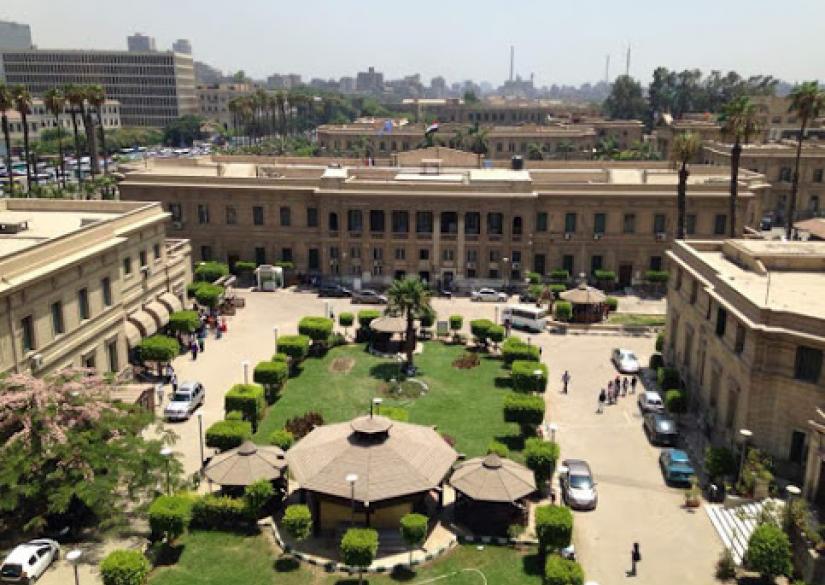
Cairo University — Iconic Dome Building & Campus Aerial View
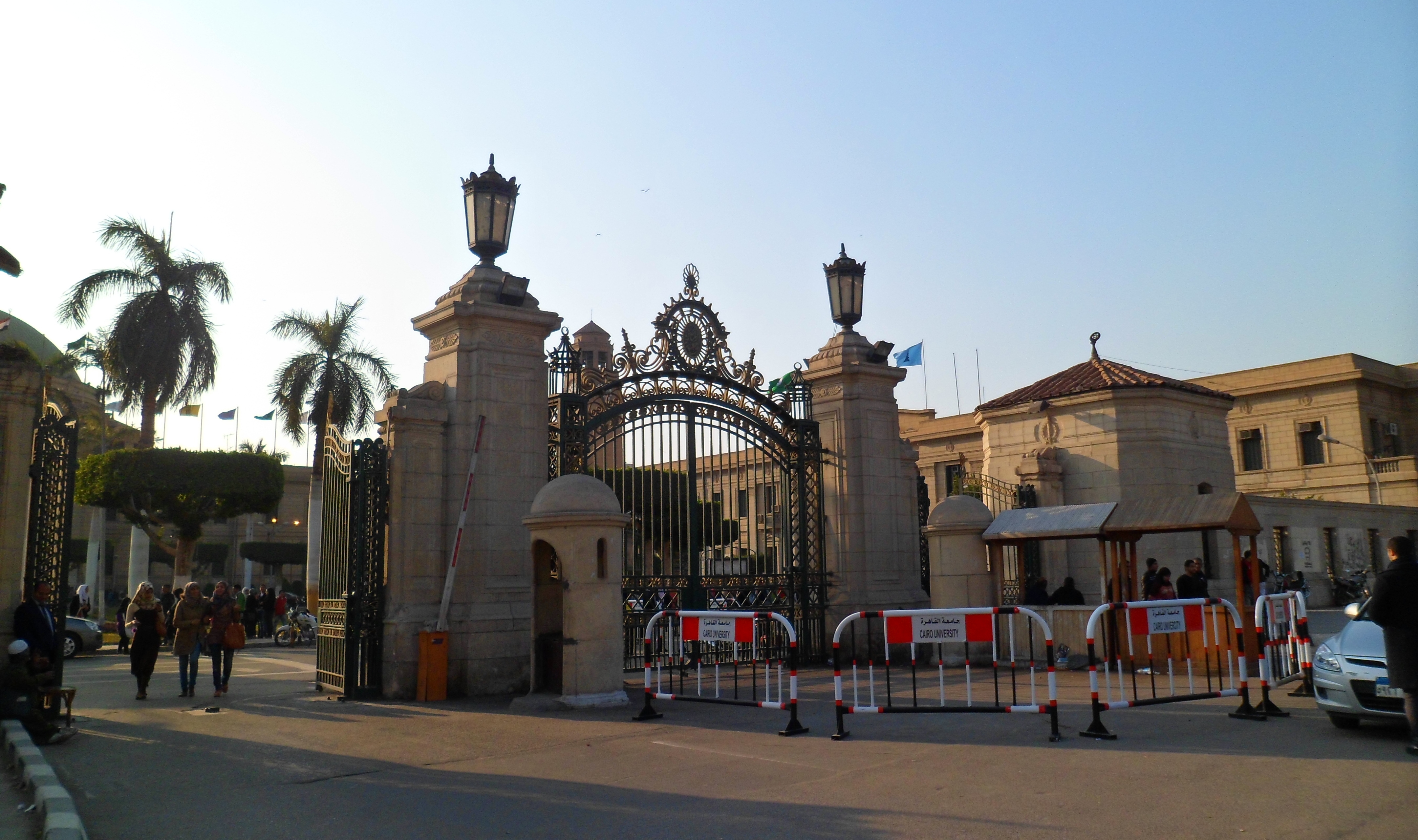
Cairo University — Historic Campus Buildings & Gardens

Cairo University Campus — Giza, Egypt
Cairo University comprises 28 faculties and institutes — here are some of the most prominent
Established in 1827, it is the oldest medical school in Egypt and one of the oldest in the Middle East. The associated Kasr Al-Ainy Hospital is the country's oldest and largest teaching hospital, serving millions of patients.
Learn More
Founded in 1816, it is the oldest engineering school in Egypt and the Middle East. Offers programs in civil, mechanical, electrical, architectural, computer, and biomedical engineering.
Learn More
Established in 1925 with 12 departments covering mathematics, physics, chemistry, biology, geology, astronomy, and more. Home to Ahmed Zewail, Nobel Laureate in Chemistry (1999).
Explore Our Faculty
One of the newest faculties (est. 1996), offering programs in computer science, information systems, artificial intelligence, and data science. The first AI faculty in Egypt.
Learn More
Established in 1925, it is a leading pharmacy school in the Middle East. Offers programs in pharmaceutical chemistry, pharmacology, pharmaceutics, and clinical pharmacy.
Learn More
A leading institution for economics, political science, and public administration in Egypt and the Arab world. Many of its graduates have become ministers, ambassadors, and policy leaders.
Learn More
One of the founding faculties (1925), offering programs in Arabic, English, French, philosophy, history, geography, psychology, sociology, and library science. Naguib Mahfouz's alma mater.
Learn More
One of the founding faculties, established in 1925. Provides comprehensive legal education and has trained generations of judges, lawyers, and legal scholars throughout the Arab world.
Learn More
Offers programs in agricultural sciences, food technology, soil science, and environmental agriculture. Plays a vital role in Egypt's food security research and agricultural development.
Learn More
One of the leading media and journalism schools in the Arab world. Offers programs in journalism, broadcasting, public relations, and digital media.
Learn More